|
|
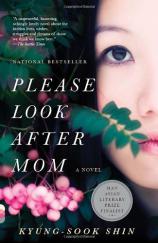
Please Look After Mom
translated by Chi-Young Kim
by Kyung-Sook Shin
List Price: $24.95
Pages: 256
Format: Hardcover
ISBN: 9780307593917
Publisher: Knopf
A million-plus-copy bestseller in Korea --- a magnificent English-language debut poised to become an international sensation --- this is the stunning, deeply moving story of a family’s search for their mother, who goes missing one afternoon amid the crowds of the Seoul Station subway.
Told through the piercing voices and urgent perspectives of a daughter, son, husband, and mother, Please Look After Mom is at once an authentic picture of contemporary life in Korea and a universal story of family love.
You will never think of your mother the same way again after you read this book.
top of the page

1. While second-person (“you”) narration is an uncommon mode, it is used throughout the novel’s first section (the tale of the daughter, Chi-hon) and third section (the tale of the husband). What is the effect of this choice? How does it reflect these characters’ feelings about Mom? Why do you think Mom is the only character who tells her story in the first person?
2. What do we learn about the relationship between Chi-hon and her mother? What are the particular sources of tension or resentment between them? Why does Chi-hon say to her brother, “Maybe I’m being punished…” (p. 68)?
3. Why is it significant that Chi-hon is a successful writer, and how does her career affect her position in the family? What does this mean for her relationship to her mother, who is illiterate? How does it happen that her mother begins to treat Chi-hon like “a guest” when she visits home (p. 17)?
4. Mom’s life has been defined by her relationships to others and the needs of her family. When her daughter asks her, “Did you like to cook?” how does Mom’s reply summarize the divide between her own and her daughter’s generations (p. 57)? How is the generational gap between you and your parents, and/or you and your children, at all similar to, or different from, this one?
5. What are some of the reasons for the special bond between the eldest son, Hyong-chol, and his mother?
6. Why does Hyong-chol feel that he has disappointed his mother? Why does she apologize to him when she brings Chi-hon to live with him (p. 89)? Why do you think he hasn’t achieved his goals (p. 112)?
7. Why is food such a powerful element in Hyong-chol’s memories of his mother?
8. How do you explain the fact that Mom has been seen by various people wearing blue plastic sandals, with her foot badly injured, although when she disappeared she was wearing low-heeled beige sandals (pp. 64, 72, 73, 90, 91)? What do you make of the pharmacist’s story of treating her wounded foot and calling the police (pp. 99–101)? Does Mom’s own narrative solve this mystery?
9. The Full Moon Harvest is a festival in which Koreans traditionally return to their family home to honor their ancestors. Hyong-chol reflects that people are now beginning to take holidays out of the country instead, saying, “Ancestors, I’ll be back” (p. 92). What feelings do memories of their mother’s preparations for the festival stir up in Chi-hon, Hyong-chol, and their father (pp. 92–98)?
10. Weeks after his wife disappears, her husband discovers that for ten years she has been giving a substantial amount of money --- money their children send her each month ---to an orphanage where she has taken on many responsibilities (pp. 116–21). How does the husband react to this and other surprising discoveries about her life?
11. After Mom has gone missing, her husband says to himself, “Your wife, whom you’d forgotten about for fifty years, was present in your heart” (p. 122). Discuss the pain and regret Mom’s family feels, including in the context of the book’s epigraph from Franz Liszt, “O love, as long as you can love.” Have they followed this edict successfully? Why do you think Kyung-sook Shin chose this quote to open her story?
12. Taking out the burial shrouds his wife had made for the two of them, her husband remembers her wish that he die first: “Since you’re three years older than me, you should leave three years earlier” (p. 135). What is the effect of the way this passage moves from poignancy to humor and back again? Similarly, how do grief and warmth, even happiness, intertwine as he recalls his wife’s generosity and her hands applying a warm towel to his arthritic knee (p. 140)?
13. Do you think Mom’s husband and children would have been able to help her if they had paid her and her illness more attention? Or, given her aversion to the hospital and the way she hid her sickness, was what happens to her inevitable?
14. Discuss the return of Mom as storyteller and narrator in the fourth section. What is inventive about this choice on the author’s part? What surprised you --- and what remained a mystery?
15. How does Mom’s feeling for her younger daughter differ from her feeling for Chi-hon? Why was she able to be more attached to the younger daughter than the elder one (pp. 180-85)? How is the use of the second person here --- Mom addressing her daughter as “you” --- different from the use of second person in chapters 1 and 3?
16. What do her children and husband discover about Mom’s life only after she disappears? How do her actions express her generosity and benevolence? Do you see some of her activities as ways of seeking self-fulfillment? Was she, through giving to others, taking care of herself?
17. What are we to understand of the fact of Mom’s possibly being spotted, in chapter 2 (“I’m Sorry, Hyong-chol”), in the various neighborhoods where Hyong-chol has lived in Seoul? In Mom’s own narrative (chapter 4, “Another Woman”), what is the connection between herself and the bird her daughter sees “sitting on the quince tree” (p. 175; see also p. 170).
18. At the end of the father’s section, he says to his older daughter, “Please…please look after your mom” (p. 164). How does Chi-hon carry out this directive? How is it related to her feelings about the Pietà and her purchase of “rose rosary beads” at the Vatican (pp. 234–37)?
19. What are the details and cultural references that make this story particularly Korean? What elements make it universal?
top of the page

"The universal resonance of family life lifts a novel rooted in the experience of Korean modernity to international success. A best-seller in her native South Korea, Shin’s Please Look After Mom tells the story of Park So-nyo, a devoted, do-all wife and mother who mysteriously goes missing. . . . Primarily composed of four sections narrated by Park, her eldest son, her husband, and one of their two daughters, the book ---Shin’s first to be translated into English ---is a moving portrayal of the surprising nature, sudden sacrifices, and secret reveries of motherhood. . . . As the novel progresses and Park’s whereabouts remain unclear, much that can be forgotten between mothers and children, husbands and wives, and among siblings resurfaces in the voices of this family desperate to locate the one person who was and always will be the center of their lives."
Elle
"Indelible . . . In four distinct voices, the character of Mom ---a rural farmwoman whose ‘hands could nurture any life’ ---is reassembled by her eldest daughter, whose books Mom couldn’t read; her eldest son, for whom she could never do enough; her husband, who never slowed down; and finally Mom herself as she wanders through memories both strange and familiar. Shin’s breathtaking novel is an acute reminder of how easily a family can fracture, how little we truly know one another, and how desperate need can sometimes overshadow even the deepest love. VERDICT: Already a prominent writer in Korea, Shin finally makes her English-language debut with what will appeal to all readers who appreciate compelling, page-turning prose. Stay tuned: Mom should be one of this year’s most-deserving bestsellers."
Library Journal
"A mother’s disappearance exposes family consciences, secrets and dependencies . . . An enormous publishing success in South Korea, this simple portrait of a family shocked into acknowledging the strength and heroic self-sacrifice of the woman at its center is both universal and socially specific. . . . The narration by four different family members exposes guilt and insights all around, from unmarried daughter Chi-hon, a novelist, to [the mother] herself. Partly a metaphor for Korea’s social shift from rural to urban, partly an elegy to the intensity of family bonds as constructed and maintained by self-denying women, this is tender writing."
Kirkus Reviews
"Affecting . . . Poignant and psychologically revealing . . . Readers should find resonance in this family story, a runaway bestseller in Korea poised for a similar run here."
Publishers Weekly
|
Oprah's Book Club Selection
Tell us and you could win 12 copies of this book for your group!
Beautiful Ruins
by Jess Walter
Click here
for more details.

Contest
Win Copies for your Book Group

This month's prize:
City of Women by David R. Gillham
Click here
for more details


|