Reading Group Guide
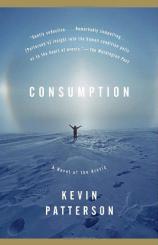
Consumption
by Kevin Patterson

List Price: $14.95
Pages: 400
Format: Paperback
ISBN: 9780307278944
Publisher: Anchor

Click here to buy this book from Amazon.com.
Click here to buy this book from Amazon.ca.


About This Book


In Rankin Inlet, a small town bordering the Arctic Ocean, the lives of the Inuit are gradually changing. The caribou and seals are no longer plentiful, and Western commerce has come to the community through a proposed diamond mine. Victoria Robertson wakes to a violent storm, her three children stirring in the dark. Her father, Emo, a legendary hunter who has come in off the land to work in a mine, checks to see if the family is all right. So does her Inuit lover, as Victoria’s British husband is away on business.

Thus the reader enters into the modern contradictions of the Arctic—walrus meat and convenience food, midnight sun and 24-hour satellite TV, dog teams and diamond mines—and into the heart of Victoria's internal exile. Born on the tundra in the 1950s, Victoria knows nothing but the nomadic life of the Inuit until, at the age of ten, she is diagnosed with tuberculosis and evacuated to a southern sanitarium. When she returns home six years later, she finds a radically different world, where the traditionally rootless tribes have uneasily congregated in small communities. And Victoria has become a stranger to her family and her culture.

Victoria compounds her marginalization by marrying a non-Inuit, Robertson, the manager of the town store. Over the years, as her children gravitate toward the pop culture of the mainland, and as her husband aggressively exploits the economic opportunities that the Arctic offers, Victoria feels torn between her family and her ancestors, between the communal life of the North and the material life of the “South.” Through Victoria, Kevin Patterson deftly exposes the costs and consequences of cultural assimilation, and the emotional toll that such significant lifestyle changes take on communities.

Spanning countries, generations, and cultures, Consumption is an epic novel of the Arctic, and a penetrating portrait of generational division and cultural dissonance.

top of the page


rgg_discuss.gif (1294 bytes)


1. The narrator states “any conviction that technology inevitably demeans humans fails on contemplating what must have been the misery of that life,” referring to the Dorset Inuit, who lacked the sophisticated tools of the later Thule Inuit.How do you think contemporary Inuit, as they are portrayed in Consumption, feel about technology?

2. In both the Sanitorium scene and in the depiction of Amanda’s friends the boys seem more displaced, more adrift than the girls. Are girls and women affected differently by rapid cultural change than men and boys? Do you find this portrayal convincing?

3. Why was Penny so desperate to find Pauloosie after he went out on the land? Would he have made different decisions had he known her state?

4. Victoria’s kids and Amanda and her friends are similar in age but live in very different places. Do the problems they face better reflect these similarities or these differences?

5. How did the depiction of the hunting scenes affect your understanding of these characters and the Arctic?

6. The author contends that change is harder on children than on adults. Do you agree with this?

7. What is the author’s purpose in interweaving Balthazar’s ruminations with the narrative of the novel? What do you learn about Balthazar that you wouldn’t have otherwise?

8. Who is the real core, the central character of the book: Victoria, Balthazar, the Inuit, Pauloosie, Emo?

9. Why won’t Victoria have anything to do with Balthazar at the end of the novel? Does this seem convincing?

10. What are the differences between Penny and Johanna’s characters and how do they account for their different fates?

11. Is Robertson on the whole, a sympathetic character? Were you surprised to learn who killed him?

12. Children in the book play the role of savior in several instances, especially to Amanda, Johanna and Pauloosie. Does this play a role in the author’s portrayal of women as more resilient than men, in the face of cultural change?

13. There are several important members of the celibate orders in the book: Isabelle, Bernard and Raymond. What common role do they play, and why does the author place them so prominently?

14. What does the title Consumption mean to you?

top of the page

Critical Praise

“Put Kevin Patterson’s debut novel, Consumption, right at the top of your must-read list. This book is a staggeringly beautiful elegy for the traditional life of the Inuit, showing the inevitable loss when cultures collide . . . Consumption is not only a beautiful novel, but also an important one. Few people are in Patterson’s position of knowledge and experience, and so readers are given a special opportunity to learn about the Inuit, the changes in their lives, and what those changes suggest for human beings in general.”
Edmonton Journal


“In this powerful first novel . . . Patterson seamlessly works murder, sex, and intrigue into the mix and offers a terrific cast that makes arctic life, and the ties of kin, palpable. He delivers a searingly visceral message about love, loss, and dislocation.”
Publishers Weekly (starred review)


“[The novel’s] thematic resonance, along with an understated humanism reminiscent of Anton Chekhov (incidentally, another physician), make Consumption a quietly devastating novel.”
Vancouver Sun


“This is a dynamite first novel from Patterson. His broad life experience evidences itself on every page of this ambitious and tough-minded book."
Winnipeg Free Press

 
Back to top.   


Privacy Policy | Contact Us | Advertising | About Us

<© Copyright 2001-2008, ReadingGroupGuides.com. All rights reserved.