Reading Group Guide
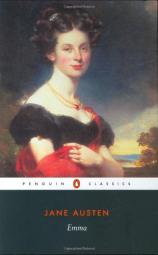
Emma
by Jane Austen

List Price: $8.00
Pages: 512
Format: Paperback
ISBN: 0141439580
Publisher: Penguin Classics

Click here to buy this book from Amazon.com.
Click here to buy this book from Amazon.ca.


About This Book

Emma Woodhouse, handsome, clever, and rich, with a comfortable home and happy disposition seemed to unite some of the best blessings of existence; and had lived nearly twenty-one years in the world with very little to distress or vex her. So begins Jane Austen's comic masterpiece Emma. In Emma, Austen's prose brilliantly elevates, in the words of Virginia Woolf, the trivialities of day-to-day existence, of parties, picnics, and country dances of early-nineteenth-century life in the English countryside to an unrivaled level of pleasure for the reader. At the center of this world is the inimitable Emma Woodhouse, a self-proclaimed matchmaker who, by the novel's conclusion, just may find herself the victim of her own best intentions.

This Modern Library Paperback Classics edition includes newly commissioned notes on the text.

top of the page


rgg_discuss.gif (1294 bytes)

1. Describe the class and rank of various characters in the village of Highbury. Compare the positions of Mr. Weston, Mr. Elton, Miss Taylor, Harriet, and Emma with others in Highbury. How do matters of class affect the interaction of these characters, and would you describe class as being rigid or flexible as it is depicted by Jane Austen? To what extent can class be said to be of central importance to the development of the novel, since it is one of the most important considerations in marriage? Does class seem to be treated differently by those in Highbury than it does by outsiders, for example Frank Churchill and Mrs. Elton? Do you think it is significant that no woman in Highbury is of Emma's age and rank?

2. How does the relationship between Mr. Knightley and Emma change throughout the course of the novel? Although Austen does not directly tell us what their relationship was like during Emma's childhood, their long and intimate friendship is established at the novel's opening. In light of their occasional quarrels and Knightley's criticisms of Emma, for example, the criticism he made on Box Hill, how does Mr. Knightley feel about Emma? Do Mr. Knightley's feelings change as the novel progresses? If they do, what incidents account for the changes in his feelings?

3. Does Emma act as a good friend to Harriet Smith? Are Emma's concerns for Harriet's education and refinement born of an honest desire to help, or is it something less altruistic? Are Mr. Knightley's criticisms of Emma's interference with Mr. Martin's marriage proposal justified? Does Harriet ultimately benefit from Emma's friendship or her attempts to help her?

4. While matchmaking is the central device in Emma, both for the plot and as a backdrop to develop characters, not all of the matches made in the novel are good. Compare the matches made between Mr. Weston and Miss Taylor, Emma and Mr. Knightley, Harriet and Mr. Martin, Jane Fairfax and Frank Churchill, and Mr. Elton and Mrs. Elton. Which are good matches and which are bad? What character traits in the couples make them suited or unsuited for each other? Why are the mismatches so important to the story?

5. In the final analysis, is Emma a sympathetic character? Does she seem to have good intentions only marred by a slight desire to interfere with other people's lives, or is she thoughtless and unconcerned with the effects she has on others? In your estimation, is Emma ultimately moral or immoral? What specific incidents in the novel lead you to that conclusion?

top of the page

Critical Praise

"Jane Austen is my favorite author! ... Shut up in measureless content, I greet her by the name of most kind hostess, while criticism slumbers."
—EM Forster

 
Back to top.   


Privacy Policy | Contact Us | Advertising | About Us

<© Copyright 2001-2008, ReadingGroupGuides.com. All rights reserved.